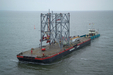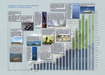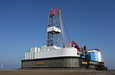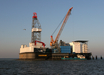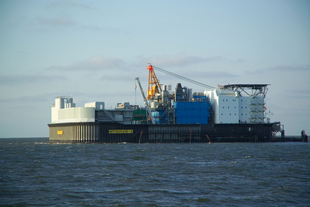
Drilling and Production Island

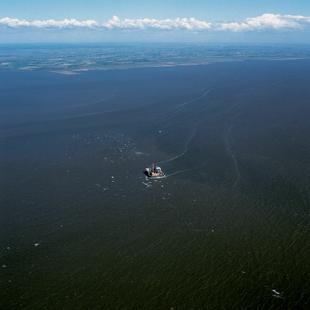
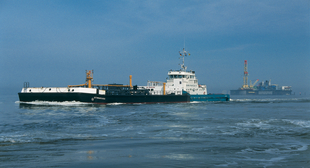
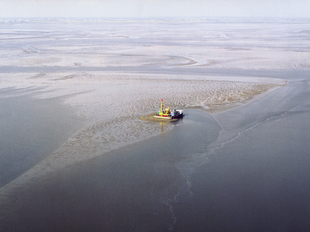
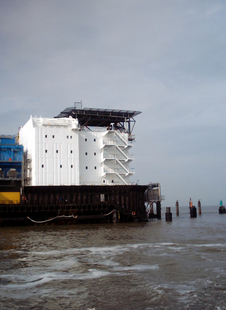
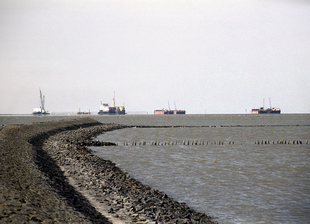
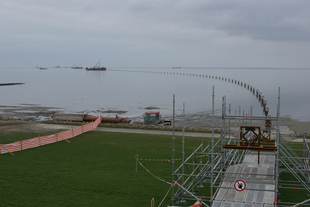
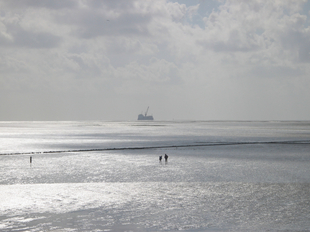
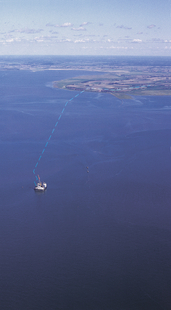
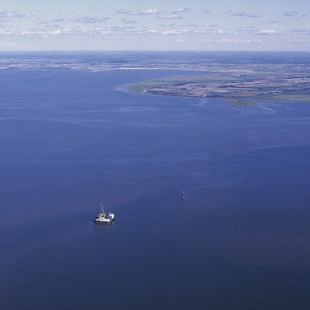
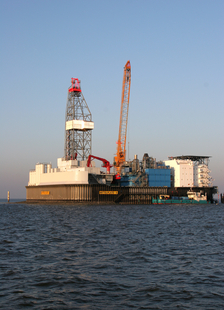
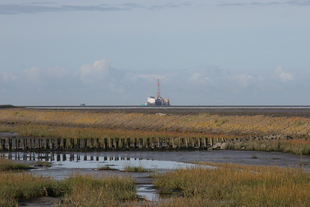
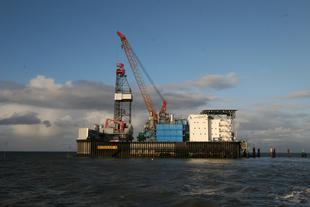
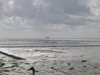
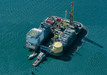
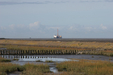
Looking out to sea from the dike at Friedrichskoog Spitze, the Mittelplate Drilling and Production Island is visible in the distance. It is located 7 kilometers off the coast of Dithmarschen, in the Wattenmeer tidelands in the state of Schleswig-Holstein.
mpk_001.jpg

08/2004
RGB - JPG
18 x 13.5 cm
300 dpi
2.14 MB

Reprints permitted free of charge
specimen copy requested

Download
Drilling and Production Island

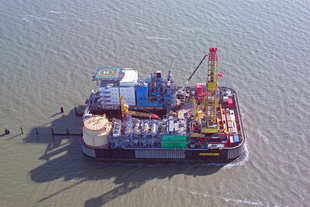
Sophisticated, state-of-the-art technology, multiple levels of safeguards at every stage of the production process and the employment of experienced, responsible specialists all add up to the kind of safety package that ensures reliable environmental protection in producing crude from the Mittelplate Drilling and Production Island.
mpk_002.jpg

08/2004
RGB - JPG
18 x 18 cm
300 dpi
4.92 MB

Reprints permitted free of charge
specimen copy requested

Download

Mittelplate oil deposits

Germany’s largest oil deposits are located off the North Sea coast on the southern boundary of the Wattenmeer Tidelands National Park in the state of Schleswig-Holstein. The Mittelplate Consortium – which consists of RWE Dea AG as operator and Wintershall AG, each with a 50% share – had produced 15 million mt of crude from the reservoir by the end of June 2005.
mpk_003.jpg

08/2004
RGB - JPG
18 x 18 cm
300 dpi
5.69 MB

Reprints permitted free of charge
specimen copy requested

Download

Drilling and Production Island

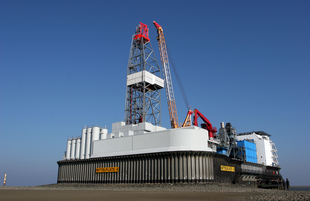
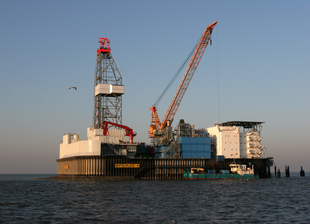
The 70 x 95 meter island was designed and built to meet the special safety requirements necessary in this ecologically sensitive production region. The island was built on top of the sandy tidelands as a compact, sealed steel-and-concrete basin. Reliable shelter from the forces of nature on the outside, and reliable containment to protect the environment.
mpk_004.jpg

08/2004
RGB - JPG
24 x 16 cm
300 dpi
4.76 MB

Reprints permitted free of charge
specimen copy requested

Download
Drilling and Production Island

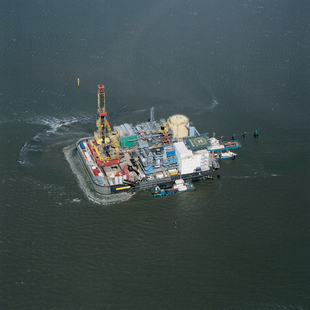
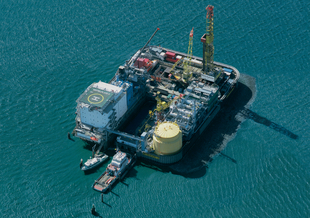
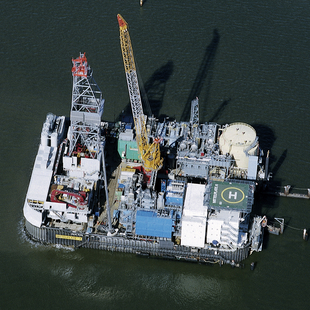
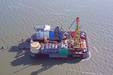
The aerial photograph shows the compact design of Mittelplate Drilling and Production Island. All facilities and equipment are housed on a minimal surface area of 70 x 95 meters.
mpk_007.jpg

08/2004
RGB - JPG
18 x 18 cm
300 dpi
4.43 MB

Reprints permitted free of charge
specimen copy requested

Download

Dieksand production wells

The Dieksand production wells were drilled using one of the heaviest deep-hole drilling rigs in Europe. To reach the eastern section of the Mittelplate oil field at a depth of around 2,000 meters, wells were drilled from land and then, using extended-reach drilling technology, pushed at an angle over distances of between 8,000 meters to more than 9,000 meters.
mpk_008.jpg

08/2004
RGB - JPG
18 x 24 cm
300 dpi
3.52 MB

Reprints permitted free of charge
specimen copy requested

Download

Separators

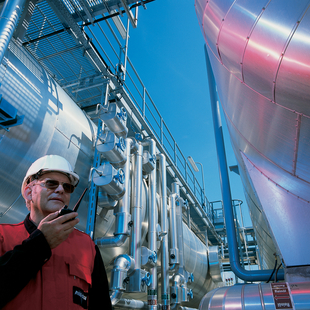
The processing equipment forms the core of the Land Station. Gas and water are removed from the crude arriving through pipelines from the well site in horizontal separators.
mpk_009.jpg

04/2005
RGB - JPG
18 x 18 cm
300 dpi
4.28 MB

Reprints permitted free of charge
specimen copy requested

Download

Harbor basin

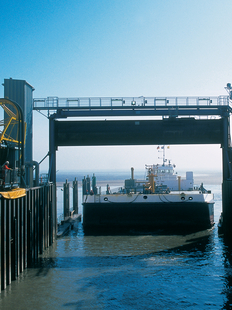
The integrated harbor basin on the Mittelplate Drilling and Production Island. Prior to the commissioning of the pipeline in October 2005, the basin was sealed off from the outside world by lowering a lock gate as soon as the transport barge had entered, and before loading commenced. This design – a world first - ensured that any contamination of the seawater could be remedied completely before the lock gate was reopened.
mpk_010.jpg

08/2004
RGB - JPG
18 x 24 cm
300 dpi
5.09 MB

Reprints permitted free of charge
specimen copy requested

Download

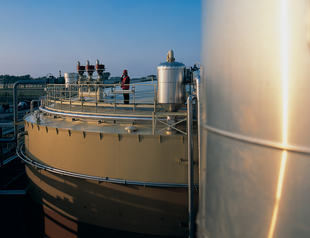
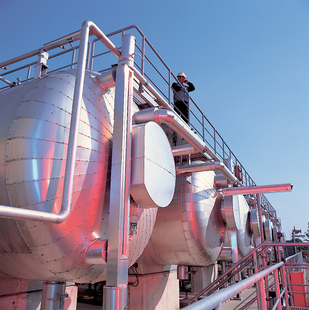
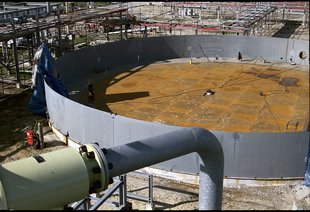
Crude oil storage tank

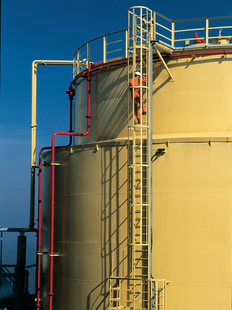
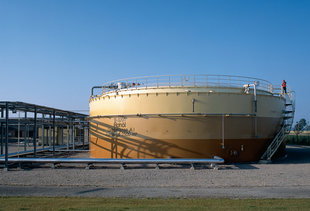
Double-hulled crude oil storage tank with a capacity of 2,000 cubic meters on Mittelplate Drilling and Production Island.
mpk_012.jpg

08/2004
RGB - JPG
18 x 24 cm
300 dpi
6.04 MB

Reprints permitted free of charge
specimen copy requested

Download

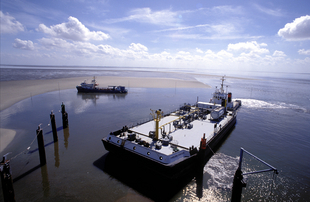
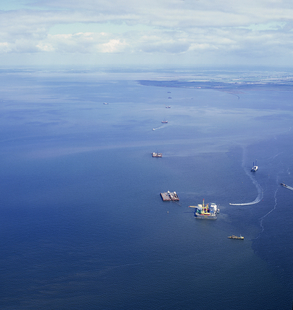
Tug-and-barge unit

Until the commissioning of the pipeline in October 2005, the crude produced on the island was shipped to the mainland using special tug-and barge units consisting of an unpowered tank barge and a highly maneuverable tug built for these tidal flatlands.
mpk_013.jpg

08/2004
RGB - JPG
24 x 13 cm
300 dpi
4.82 MB

Reprints permitted free of charge
specimen copy requested

Download
Sheet pile wall

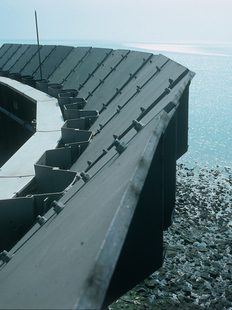
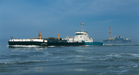
Sheet pile wall with wave deflector. The sheet pile wall extends to a height of 11 meters above the level of the open sea. Nothing can enter the island from the outside, apart from rain and spray. And nothing can escape to the outside, not even rain water.
mpk_014.jpg

08/2004
RGB - JPG
18 x 24 cm
300 dpi
4.32 MB

Reprints permitted free of charge
specimen copy requested

Download

Flat-bottomed tanks

The flat-bottomed tanks at the Dieksand Land Station are fitted with a double-bottomed concrete collecting basin. After the crude has been successfully treated, it is pumped by pipeline to Brunsbüttel.
mpk_015.jpg

08/2004
RGB - JPG
22 x 15 cm
300 dpi
4.36 MB

Reprints permitted free of charge
specimen copy requested

Download
Oil production on Mittelplate

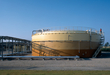
The economic and ecological track record after 18 years of crude oil production is positive. The Mittelplate Consortium managed to increase annual rates of production continually with an ongoing optimization program for the drilling, production and transportation concept. As a result of the onshore development in operation since mid-2000, production volumes have gone up considerably.

By June 2005, the Consortium had produced approx. 9.5 million mt of crude from Mittelplate Drilling and Production Island, using 18 of a possible 44 wells, and without any special incidents. The volume produced from the onshore operation is 5.5 million mt. By the end of the year 2005, the total volume produced from the oil field was 15 million mt of crude.
mpk_016.jpg

08/2004
RGB - JPG
25.6 x 18 cm
300 dpi
8.8 MB

Reprints permitted free of charge
specimen copy requested

Download
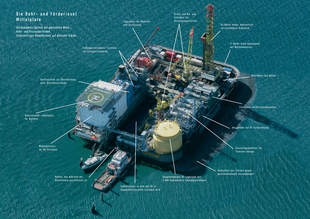
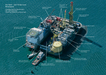
Island details

A compact system with separate living, drilling and process areas – safe production and environmental protection using a minimum footprint.
mpk_017.jpg

08/2004
RGB - JPG
29.7 x 21 cm
300 dpi
11.63 MB

Reprints permitted free of charge
specimen copy requested

Download
Drilling and Production Island

Mittelplate is not only Germany's biggest production field, it also has the highest rate of production by far. Estimates of commercially recoverable reserves run to about 40 million mt of crude. As the remaining domestic oil deposits are largely depleted, the Mittelplate deposit, which accounts for just under 65 per cent of national crude oil reserves, is the only German oil field with a productive future. This deposit continues to make an outstanding contribution to domestic oil production, and hence to the stability of the energy supply in the Federal Republic of Germany. Its value in macro-economic terms is in the order of several billion euros.
mpk_019.jpg

08/2004
RGB - JPG
16 x 24 cm
300 dpi
3.44 MB

Reprints permitted free of charge
specimen copy requested

Download

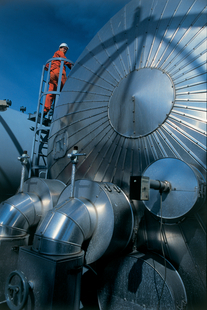
Process tank

The process tanks on Mittelplate Drilling and Production Island are linked in a closed system fitted with vapor recovery pipes, which effectively prevents emissions.
mpk_020.jpg

08/2004
RGB - JPG
16 x 24 cm
300 dpi
5.28 MB

Reprints permitted free of charge
specimen copy requested

Download

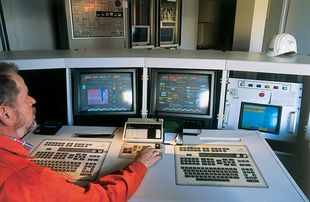
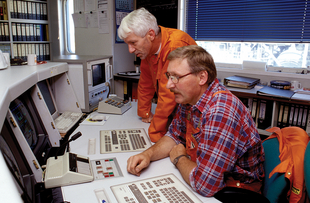
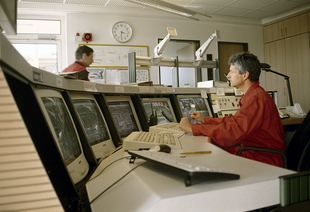
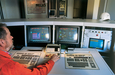
Control room

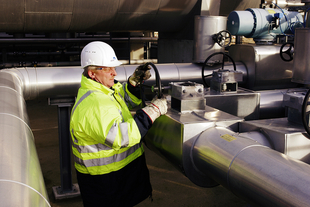
Production and processing operations are controlled and monitored constantly by specialist staff with the help of sophisticated control equipment and computers.
mpk_021.jpg

08/2004
RGB - JPG
10 x 6.5 cm
300 dpi
0.97 MB

Reprints permitted free of charge
specimen copy requested

Download
Drilling and Production Island

The drilling and production island is located in the southern part of the Wattenmeer National Park in the North German state of Schleswig-Holstein. Based on Germany’s latest national park legislation, the island is inside a Category 2 Protection Zone. The facility, including the surrounding embankment, covers an area of just under 0.02 km2. The entire Wattenmeer tidelands cover an area of 4,415 km2.
mpk_022.jpg

08/2004
RGB - JPG
18 x 24 cm
300 dpi
8.23 MB

Reprints permitted free of charge
specimen copy requested

Download

Oil production on Mittelplate

Over the many years of its operation the Mittelplate facility, specially designed and developed for conditions in this ecologically sensitive production area, has proven that oil production and environmental protection can go hand in hand. All project activities since the start of production in 1987 have been carried out without a single incident.
mpk_023.jpg

08/2004
RGB - JPG
24 x 18 cm
300 dpi
5.6 MB

Reprints permitted free of charge
specimen copy requested

Download
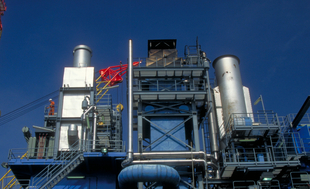
Gas turbines

Gas turbines for generating electricity and heat (co-generation) on Mittelplate Drilling and Production Island. Power generated in excess of the island’s own requirements is fed via cable into the public supply grid on the mainland.
mpk_024.jpg

08/2004
RGB - JPG
18 x 11 cm
300 dpi
1.96 MB

Reprints permitted free of charge
specimen copy requested

Download
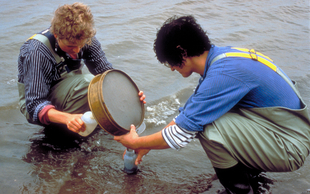
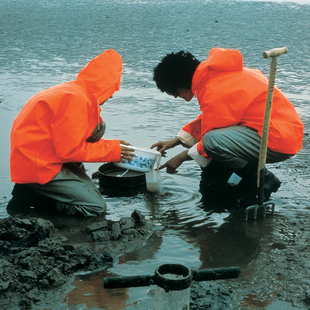
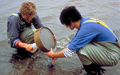
Benthos investigations

The consortium commissioned a number of environmental impact assessments in order to investigate and evaluate any environmental effects stemming from the Mittelplate crude oil production. Examples of such studies relate to the organisms living on the seabed (benthos investigations) in the immediate vicinity of the island.
mpk_025.jpg

08/2004
RGB - JPG
24 x 15 cm
300 dpi
3.9 MB

Reprints permitted free of charge
specimen copy requested

Download
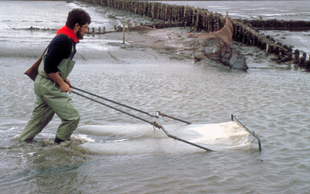
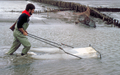
Fish populations

As part of the accompanying environmental investigations, studies recorded the seasonal and spatial distribution of the fish population in the area surrounding Mittelplate. The structure of the commercial fishing industry was also examined. The studies found no discernible evidence of any effects on the ecology and fish populations emanating from the activities on the island.
mpk_026.jpg

08/2004
RGB - JPG
24 x 15 cm
300 dpi
5.72 MB

Reprints permitted free of charge
specimen copy requested

Download
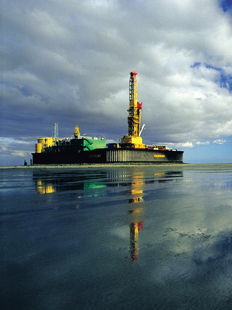
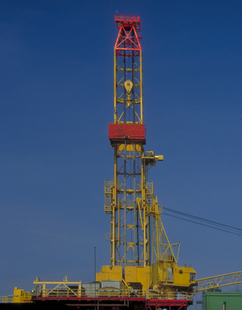
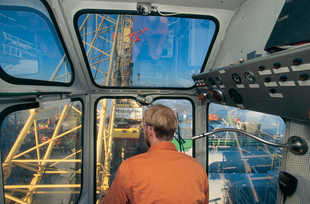
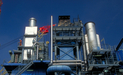
Drilling tower

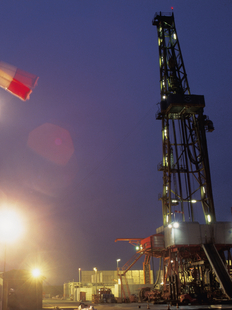
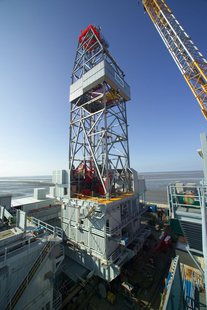
View of the 52-meter high drilling tower on Mittelplate Drilling and Production Island. The tower can be repositioned using hydraulics. The rig was in use until the middle of the year 2005. In the second half of the year, a new, more powerful drilling rig is installed on the island at a cost of approx. € 50 million.

The island has provision for 44 wells to be drilled. Since the start of production, 18 wells had been drilled by 2005.
mpk_027.jpg

08/2004
RGB - JPG
12.5 x 16 cm
300 dpi
1.79 MB

Reprints permitted free of charge
specimen copy requested

Download

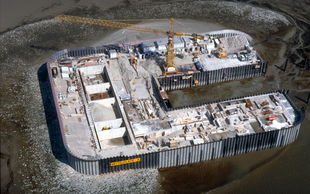
Construction phase

Aerial view of the island during construction. The basin’s design, with its concrete island surface and the sheet pile walls, is clearly visible. The design providers shelter from the forces of nature outside, and reliable containment to protect the environment.
mpk_028.jpg

08/2004
RGB - JPG
24 x 15 cm
300 dpi
4.43 MB

Reprints permitted free of charge
specimen copy requested

Download
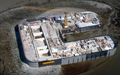
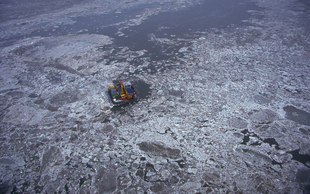
Island ice-bound

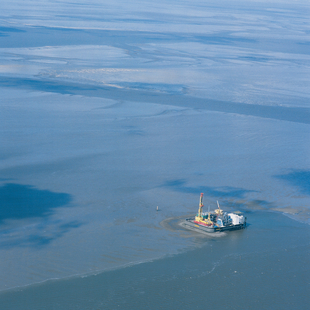
The compact design of the drilling and production island has stood the test of time even under unfavorable conditions, such as when being surrounded by ice.
mpk_029.jpg

08/2004
RGB - JPG
24 x 15 cm
300 dpi
5.88 MB

Reprints permitted free of charge
specimen copy requested

Download
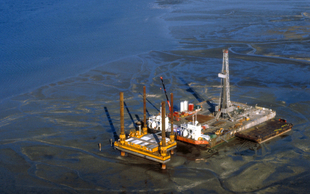
Exploratory well

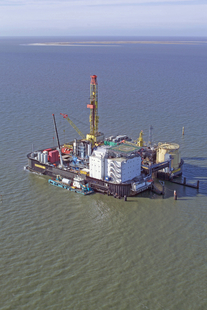
The exploration wells were drilled from pontoons sitting on top of the Wattenmeer tidal flats. The Mittelplate 1 well struck oil in August 1980. The oil deposits are located at a depth of 2,000 to 3,000 meters in porous Dogger sandstone layers.
mpk_030.jpg

08/2004
RGB - JPG
24 x 15 cm
300 dpi
4.51 MB

Reprints permitted free of charge
specimen copy requested

Download
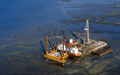
Living quarters

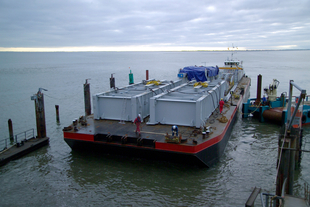
New living quarters, consisting of two modules for engineering and structural reasons, were installed on Mittelplate Island in October 2003. Instead of the previous 69 persons, the new living quarters can accommodate 96. The new living quarters are of a much better standard. The cost of the new modules, which were built at the Aker shipyards based in Wismar over a period of about seven months, was approximately € 10 million. Transportation, refitting and installation on Mittelplate Island cost another € 10 million.
mpk_031.jpg

08/2004
RGB - JPG
8 x 11 cm
300 dpi
0.61 MB

Reprints permitted free of charge
specimen copy requested

Download

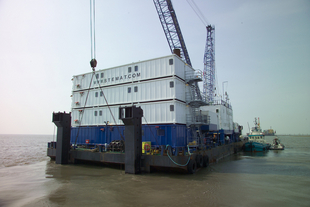
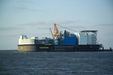
Transport barges

Before the pipeline link was commissioned in October 2005, the crude produced and processed on Mittelplate island was transported ashore in tug-and-barge units – consisting of tank barges and highly maneuverable tugs – that were specially designed for the Wattenmeer tidelands. The tank barges - 45 meters long, 18 meters wide and with a fully-laden draft of 2 meters - are a double-hulled design. They will not sag or capsize and are ice-proof, and they were designed to meet the today's maritime safety requirements as far back as 1987. The schedule of trips to and from the island was dependent on the tides. Whenever winds reached force 7 or 8, oil transportation had to be stopped.
mpk_032.jpg

08/2004
RGB - JPG
10 x 6.5 cm
300 dpi
0.93 MB

Reprints permitted free of charge
specimen copy requested

Download
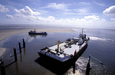
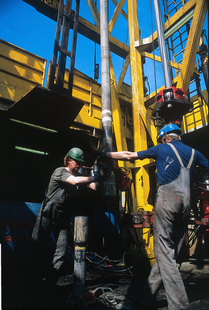
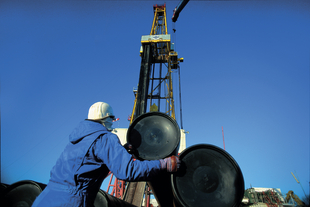
Drilling crews

18 of a possible 44 wells had been drilled from Mittelplate Island by the beginning of 2005. Experienced crews ensure safe drilling operations.
mpk_033.jpg

08/2004
RGB - JPG
13.5 x 20 cm
300 dpi
4.6 MB

Reprints permitted free of charge
specimen copy requested

Download

Areas of exploration

In order to measure and assess the impact on the environment the oil production on Mittelplate may have, the consortium, in consultation with the relevant authorities, has commissioned numerous environmental studies since the start of the project. Conducted by the commissioned research institutes and engineering companies, the studies – some of which run long-term – are designed to determine and monitor the impact the drilling and production island Mittelplate may have on the ecosystem of the Wattenmeer.

The map shows the various investigation sites for the studies focusing on sediments and geomorphology, benthos populations, fish populations and commercial fisheries, as well as birdlife in the area surrounding Mittelplate Drilling and Production Island.
mpk_034.jpg

08/2004
RGB - JPG
24 x 13 cm
300 dpi
1.73 MB

Reprints permitted free of charge
specimen copy requested

Download

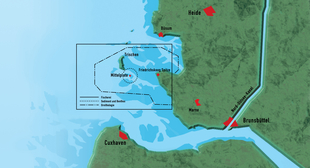
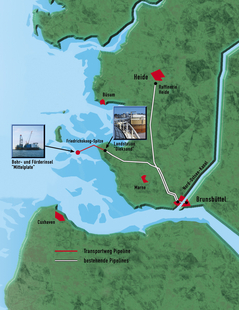
Locations

The map shows the locations of Mittelplate Drilling and Production Island, seven kilometers off the coast of the North German state of Schleswig-Holstein in the Wattenmeer tidelands, and the Dieksand Land Station at Friedrichskoog. Also shown are the route of the pipeline link from the island to the processing facilities at the Dieksand Land Station, and the pipelines from the Land Station to Brunsbüttel and from Brunsbüttel to the Heide refinery.
mpk_036.jpg

10/2005
RGB - JPG
10 x 13 cm
300 dpi
1.27 MB

Reprints permitted free of charge
specimen copy requested

Download

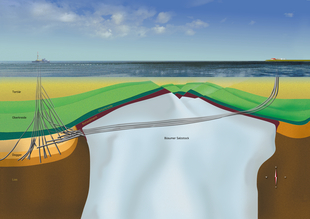
Diagram of well sites

Since the start of production in 1987, 18 out of a possible 44 wells have been sunk from the artificial Mittelplate Drilling and Production Island built in the Wattenmeer tidelands, some seven kilometers off the coast at Friedrichskoog. These wells tap into the western, larger part of the Mittelplate oil field at depths of up to 3,000 meters.

In addition to the offshore operation, the Mittelplate Consortium has also been producing crude from the eastern parts of the oil field from shore-based facilities through extended-reach production wells since mid-2000. These high-tech wells reach lengths of 7,727, 8,284, 8,367, 8,995, 9,275, 8,450 and 8,672 meters respectively. This places them amongst the longest wells of this type worldwide. The illustration shows the paths of the extended-reach wells.

Integrated offshore and onshore development has proved to be reliable and is now contributing to the more rapid exploitation of the oil field. The total volume of crude produced from the Mittelplate oil field currently stands at more than 2 million mt of crude per annum.
mpk_038.jpg

07/2005
RGB - JPG
29.8 x 21 cm
300 dpi
8.75 MB

Reprints permitted free of charge
specimen copy requested

Download

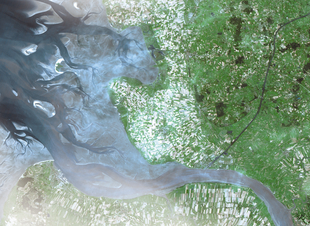
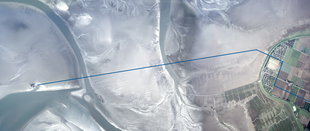
Satellite image

Aerial photograph showing the production area, taken by the Indian satellite IRS-1D at an altitude of 850 kilometers (data: © ANTRIX, Space Imaging, Euromap 1999, image processing by GAF AG 1999).
mpk_042.jpg

11/2004
RGB - JPG
24 x 17.5 cm
300 dpi
6.25 MB

Reprints permitted free of charge
specimen copy requested

Download

Dieksand production wells

The Mittelplate Consortium’s Dieksand production wells represent technological masterpieces. Using extended-reach technology, the wells had to be drilled over distances of 8,000 and up to more than 9,000 meters – with four kilometers of this distance cutting straight through the Büsum salt diapir. These wells are among the longest extended-reach wells in the world.
mpk_043.jpg

11/2004
RGB - JPG
18 x 12 cm
300 dpi
1.84 MB

Reprints permitted free of charge
specimen copy requested

Download

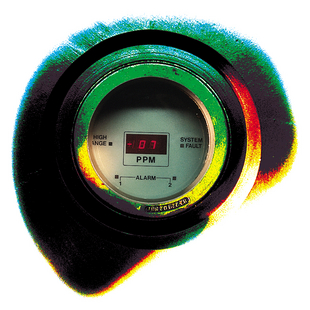
Oil monitor

Rainwater and spray are collected on the concrete surface of Mittelplate Drilling and Production Island, purified on site and only returned to the North Sea once the strict water quality standards imposed by the operating permits have been met. The water treatment facility is constantly being monitored. As soon as the so-called oil monitor indicates a water contamination level of >= 10 ppm of oil – ten parts per million – a quick-acting stop valve system prevents any water from reaching the sea.
mpk_044.jpg

11/2004
RGB - JPG
8 x 8 cm
300 dpi
0.96 MB

Reprints permitted free of charge
specimen copy requested

Download

Technology

Sophisticated, state-of-the-art technology, multiple levels of safeguards at every stage of the production process and the deployment of experienced, responsible specialists all add up to the kind of safety package that ensures reliable environmental protection in producing crude from the Mittelplate Drilling and Production Island.
mpk_045.jpg

11/2004
RGB - JPG
22 x 14.5 cm
300 dpi
4.59 MB

Reprints permitted free of charge
specimen copy requested

Download

Central control room

Experienced, responsible specialist personnel monitor and control production and crude oil treatment on the island around the clock, using complex and sophisticated instrumentation and control systems. There are multiple safeguards against any conceivable risks.
mpk_046.jpg

04/2005
RGB - JPG
13 x 8.5 cm
300 dpi
1.76 MB

Reprints permitted free of charge
specimen copy requested

Download

Flat-bottomed tanks

At the Dieksand Land Station, the crude is subjected to further purification in flat-bottomed tanks. The tanks with a capacity of 2,500 m³ each are positioned inside a double-bottomed collecting basin. Following purification, the oil is pumped into pipelines to Brunsbüttel, for distribution to customers.
mpk_047.jpg

11/2004
RGB - JPG
15 x 11.5 cm
300 dpi
1.53 MB

Reprints permitted free of charge
specimen copy requested

Download

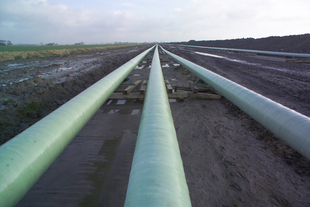
Pipeline route / pipe-laying concept

The satellite image shows the route of the pipeline link. On the ocean side, two 7.5-kilometre high-grade stainless steel pipelines were inserted into horizontal boreholes running from the dike line at Friedrichskoog-Spitze through the tidal flats off the coast to Mittelplate Island. The short-term intervention in the ecologically sensitive region was brought to a close successfully and on schedule at the end of June 2005.

On the land side behind the dike, the pipelines to the Dieksand Land Station, a distance of approx. 2.8 kilometers, are being laid into an open trench, with completion scheduled by the end of August 2005. One of the pipelines carries crude oil. The second pipeline serves as a return line for the reservoir water extracted during crude processing at the Dieksand Land Station. The water is pressed back into the reservoir to maintain internal pressure.

From 2006, the completed pipeline link allows the crude to be transported continuously, with volumes reaching 1.2 to 1.6 million mt per year.
mpk_048.jpg

11/2004
RGB - JPG
24 x 10.2 cm
300 dpi
3.01 MB

Reprints permitted free of charge
specimen copy requested

Download

Benthos investigations

The consortium commissioned a number of environmental impact assessments in order to investigate and evaluate any environmental effects stemming from the Mittelplate crude oil production. Examples of such studies relate to the organisms living on the seabed (benthos investigations) in the immediate vicinity of the island.
mpk_049.jpg

11/2004
RGB - JPG
15 x 15 cm
300 dpi
3.51 MB

Reprints permitted free of charge
specimen copy requested

Download

Separators

The crude is processed in separators at the Dieksand Land Station ready for refining and then transported to Brunsbüttel via pipelines.
mpk_057.jpg

10/2005
RGB - JPG
11 x 11 cm
300 dpi
1.78 MB

Reprints permitted free of charge
specimen copy requested

Download

Construction pits along the pipeline route

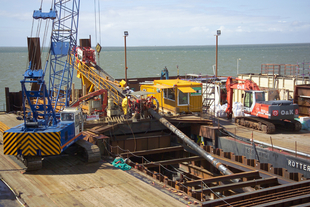
The ocean-side portion of the pipe-laying project covers about 7.5 kilometers, from the dike line at Friedrichskoog-Spitze through the tidal flats extending off the coast and on through the ‘Marner Plate’ to Mittelplate Drilling and Production Island. Pre-assembled submarine pipelines in lengths up to 1,400 meters were inserted into prepared horizontal boreholes covering the entire offshore distance in six sections. Six construction pits were prepared along the pipeline route for the pipeline sections to be welded together.

The aerial photograph shows the locations of these pits along the pipeline route from Mittelplate Island, in the foreground, to the dike.
mpk_059.jpg

05/2005
RGB - JPG
17 x 18 cm
300 dpi
3.99 MB

Reprints permitted free of charge
specimen copy requested

Download
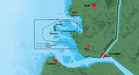
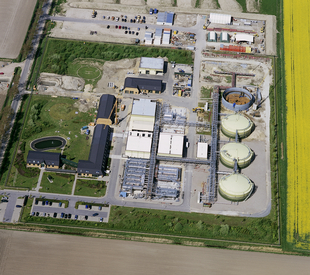
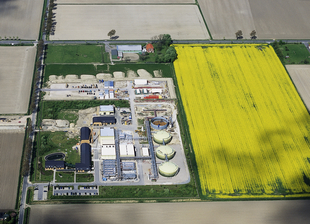
Dieksand Land Station

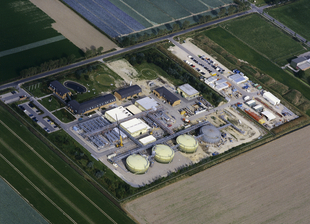
The aerial photograph shows the 55,000 m² operations site at the Dieksand Land Station, where additional process fields, a machinery hall, a gas dehydration plant, an additional flat-bottom storage tank, a number of processing vessels and separators are built and installed by the end of 2005. The operational buildings are also upgraded. The additional facilities are needed in order to process the increased volumes of crude produced as a result of the pipeline link.
mpk_060.jpg

05/2005
RGB - JPG
18 x 16 cm
300 dpi
4.25 MB

Reprints permitted free of charge
specimen copy requested

Download

Western section of pipeline construction project

View of Mittelplate Island, showing two constructions pits off the island. One of the two accommodation barges for the work crews is visible on the left.
mpk_061.jpg

05/2005
RGB - JPG
18 x 13 cm
300 dpi
3.88 MB

Reprints permitted free of charge
specimen copy requested

Download
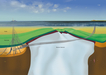
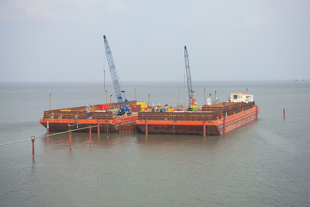
Construction pits in the Wattenmeer tidelands

In this view from the Trischendamm in Friedrichskoog, Mittelplate Island and the construction facilities look almost like ships lying at anchor.
mpk_062.jpg

05/2005
RGB - JPG
18 x 13 cm
300 dpi
4.26 MB

Reprints permitted free of charge
specimen copy requested

Download

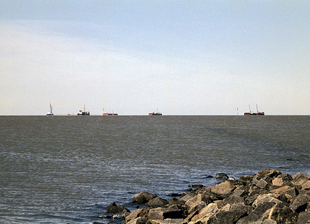
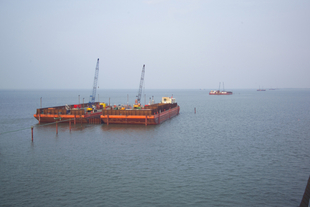
View of the construction pits in the distance

Six construction pits for the installation and joining up of the individual pipeline sections were set up in the Wattenmeer tidelands. Viewed from a distance, their respective locations trace the pipeline route.
mpk_063.jpg

05/2005
RGB - JPG
19 x 13 cm
300 dpi
4.58 MB

Reprints permitted free of charge
specimen copy requested

Download
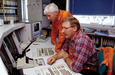
Control room at the Land Station

Highly experienced and conscientious experts monitor and control all the processes in the onshore operation using the computer systems in the control room of the Dieksand Land Station.
mpk_064.jpg

05/2005
RGB - JPG
19 x 13 cm
300 dpi
3.52 MB

Reprints permitted free of charge
specimen copy requested

Download

Fourth Dieksand storage tank under construction

The processing plant at the Dieksand Land Station is modified and expanded in order to handle the increased volume from offshore production. The work is carried out in tandem with the construction of the pipeline link. Also under construction is an additional storage tank with a capacity of 2,500 cubic meters.
mpk_065.jpg

05/2005
RGB - JPG
19 x 13 cm
300 dpi
4.41 MB

Reprints permitted free of charge
specimen copy requested

Download
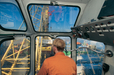
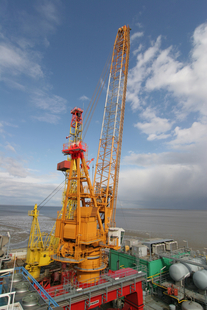
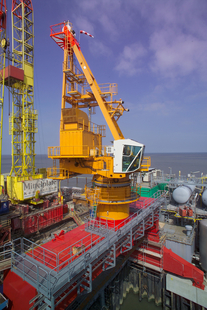
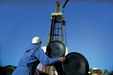
Gantry crane on Mittelplate Island

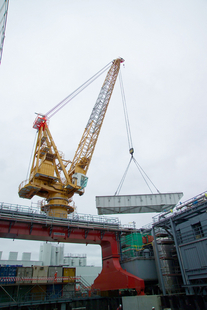
On Mittelplate Island, much of the equipment and facilities is upgraded, optimized or replaced by the end of 2005. A heavy-duty gantry crane with a slewing range capable of handling all the lifting requirements across the entire island complex was already installed in the spring.
mpk_066.jpg

05/2005
RGB - JPG
12 x 18 cm
300 dpi
2 MB

Reprints permitted free of charge
specimen copy requested

Download
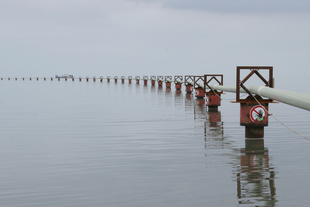
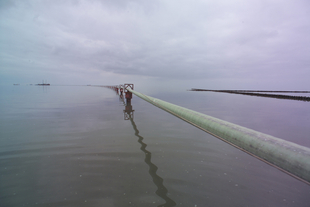
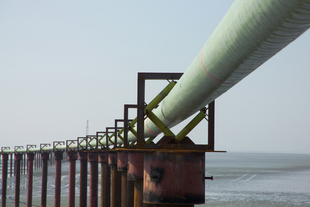
Pipeline system in the Wattenmeer tidelands

The six sections of prefabricated submarine pipelines covering the entire offshore distance of 7.5 kilometers were inserted into prepared horizontal boreholes. A system designed to protect the tidal flats, consisting of pylons with supporting roller bearings, was used to transport the pipeline sections on site.
mpk_067.jpg

05/2005
RGB - JPG
18 x 12 cm
300 dpi
1.5 MB

Reprints permitted free of charge
specimen copy requested

Download

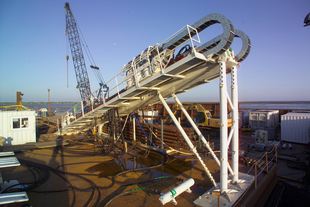
Pipeline transport system designed to traverse the dike

The course of the pipeline transport system out to the construction pits. A light-weight construction rig was installed in order to traverse the dike.
mpk_068.jpg

05/2005
RGB - JPG
18 x 12 cm
300 dpi
1.8 MB

Reprints permitted free of charge
specimen copy requested

Download
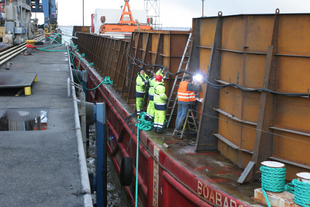
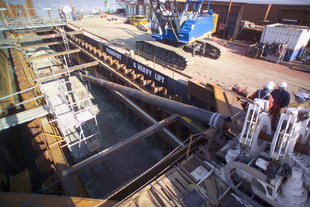
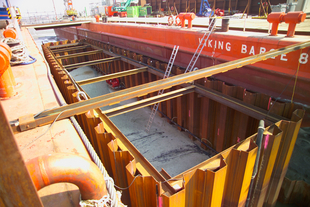
Work pontoons protected by sheet pile walls

Sheet pile walls made of steel and capable of withstanding flood tides were installed around the decks of the work pontoons. Inside these enclosed and secured construction sites, steel basins with walls reaching up to four meters in height were installed. These serve both as intermediate holding areas for material excavated from the construction pits and for processing the drilling mud used in the horizontal drilling operations.
mpk_070.jpg

05/2005
RGB - JPG
18 x 12 cm
300 dpi
2.02 MB

Reprints permitted free of charge
specimen copy requested

Download

Protective coating of pipeline segments

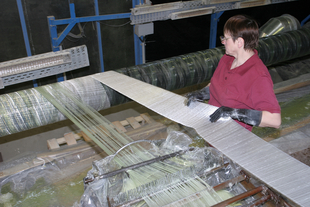
The pipeline segments are made of high-grade stainless steel. The segments were manufactured using longitudinal welded seams. A protective coating of glass-reinforced plastic (GRP) was then applied.
mpk_069.jpg

05/2005
RGB - JPG
18 x 12 cm
300 dpi
2.18 MB

Reprints permitted free of charge
specimen copy requested

Download

Fitting out of the work pontoons

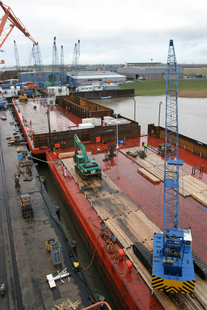
The twelve offshore work pontoons were fitted out at the port on the Elbe River owned by Hafengesellschaft Brunsbüttel. These floating work platforms, up to 100 meters in length and more than 20 meters wide and moored in pairs at each of the six construction pits along the pipeline route, were used in the construction and drilling operations.
mpk_071.jpg

05/2005
RGB - JPG
12 x 18 cm
300 dpi
2.1 MB

Reprints permitted free of charge
specimen copy requested

Download

Drilling operation inside a construction pit

A horizontal drilling rig was installed at each of the construction pits to drill the boreholes. The horizontal directional drilling technology used in the offshore section allowed the impact on the tidal flats to be minimized. Cuttings and drilling mud were collected on the pontoons and duly disposed of.
mpk_072.jpg

05/2005
RGB - JPG
18 x 12 cm
300 dpi
2.54 MB

Reprints permitted free of charge
specimen copy requested

Download

Pipeline transport system

Route taken by the pipeline transport system across the Wattenmeer tidelands.
mpk_073.jpg

05/2005
RGB - JPG
18 x 12 cm
300 dpi
0.99 MB

Reprints permitted free of charge
specimen copy requested

Download
Directional drilling rig

Drilling operation in a construction pit. The horizontal drilling rig is mounted on a bridge extending between two pontoons in such a way that it is positioned above the construction pit.
mpk_074.jpg

05/2005
RGB - JPG
18 x 12 cm
300 dpi
2.05 MB

Reprints permitted free of charge
specimen copy requested

Download
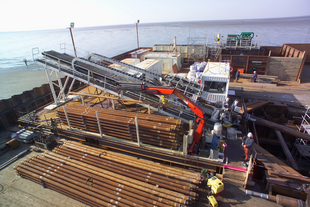
Preparing for drilling operations

Preparatory work prior to drilling a borehole. The required pipe segments are stored on the pontoons.
mpk_075.jpg

05/2005
RGB - JPG
18 x 12 cm
300 dpi
2.53 MB

Reprints permitted free of charge
specimen copy requested

Download
Directional drilling rig in operation

Looking into a 6-meter deep construction pit excavated between two pontoons. Drilling was carried out with a horizontal drilling rig mounted on top of a bridge.
mpk_076.jpg

05/2005
RGB - JPG
18 x 12 cm
300 dpi
2.55 MB

Reprints permitted free of charge
specimen copy requested

Download

Installation of gantry crane

Installation of the new gantry crane on the island. The crane's great slewing range is adequate to meet all future lifting requirements on the island.
mpk_077.jpg

05/2005
RGB - JPG
12 x 18 cm
300 dpi
2.36 MB

Reprints permitted free of charge
specimen copy requested

Download
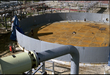
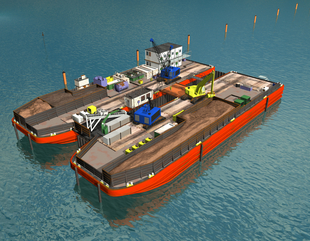
Operation of the construction pits

A total of six construction pits were set up. At each pit, two pontoons serve as work platforms and as holding areas for excavated material as well as for processing the drilling mud. The pontoons also provided surface area for storing materials and equipment. The rigs used in the horizontal drilling operations were mounted on bridges set up over the construction pits between two pontoons. Once drilling was completed, the construction pits were used to carry out the welding to join the pipeline sections.
mpk_078.jpg

05/2005
RGB - JPG
18 x 12 cm
300 dpi
1.35 MB

Reprints permitted free of charge
specimen copy requested

Download

Construction pits and pontoons

Two pontoons measuring approx. 20 x 70 meters were moored at each of the work sections. They were used in the construction and operation of the pits, and served as a platform for drilling operations.
mpk_079.jpg

05/2005
RGB - JPG
18 x 12 cm
300 dpi
1.62 MB

Reprints permitted free of charge
specimen copy requested

Download
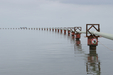
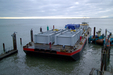
Floating living quarters

The crews working on the pipeline construction project were provided with accommodation on two barges anchored along the pipeline route.
mpk_080.jpg

05/2005
RGB - JPG
18 x 12 cm
300 dpi
1.54 MB

Reprints permitted free of charge
specimen copy requested

Download
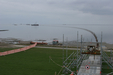
Pipeline transport system

The pipeline sections were transported from the pre-assembly site to the individual construction pits using a rope-and-pulley system with pylons and roller bearings set up along the pipeline route.
mpk_081.jpg

05/2005
RGB - JPG
18 x 12 cm
300 dpi
1.21 MB

Reprints permitted free of charge
specimen copy requested

Download
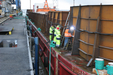
Construction pit protected by sheet pile walls

View of a construction pit, protected from flooding by sheet pile walls.
mpk_082.jpg

05/2005
RGB - JPG
18 x 12 cm
300 dpi
2.35 MB

Reprints permitted free of charge
specimen copy requested

Download
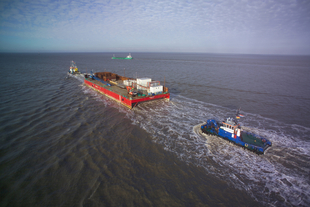
Work pontoon under tow

A fully equipped pontoon under tow from Cuxhaven to its designated location along the pipeline route.
mpk_083.jpg

05/2005
RGB - JPG
18 x 12 cm
300 dpi
1.78 MB

Reprints permitted free of charge
specimen copy requested

Download

Intermediate storage of pre-assembled pipeline sections

The assembled piping runs were stored at a pre-assembly site near Friedrichskoog prior to being inserted into the horizontal boreholes.
mpk_084.jpg

05/2005
RGB - JPG
18 x 12 cm
300 dpi
1.64 MB

Reprints permitted free of charge
specimen copy requested

Download
Welding container

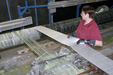
A prerequisite for the rapid completion of the pipe-laying project was the pre-assembly of the pipeline sections on the mainland. At a pre-assembly site located on a field outside Friedrichskoog-Spitze, more than 700 individual stainless-steel pipes, each 18 meters in length, were welded together in sound-proofed containers to form ten piping runs of up to 1,400 meters in length.
mpk_085.jpg

05/2005
RGB - JPG
18 x 12 cm
300 dpi
2 MB

Reprints permitted free of charge
specimen copy requested

Download
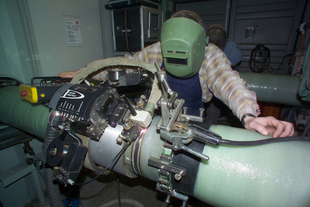
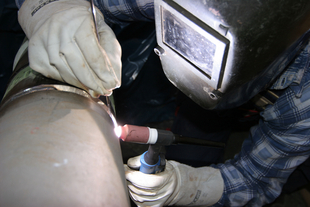
Welding the piping runs

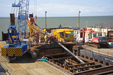
Welding work in producing the pre-assembled piping runs. A protective coating of plastic reinforced with glass fiber was applied to the welding seams, which were then x-rayed and subjected to pressure testing.
mpk_086.jpg

05/2005
RGB - JPG
18 x 12 cm
300 dpi
1.81 MB

Reprints permitted free of charge
specimen copy requested

Download
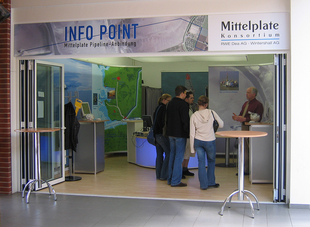
Info Point

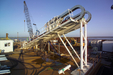
For the benefit of residents and holiday-makers interested in the project, a central information facility was set up in Friedrichskoog until early September. In addition to details about the progress and current status of the pipeline project, the almost 4,400 visitors were also provided with general information about the Mittelplate oil production facility.
mpk_087.jpg

05/2005
RGB - JPG
15 x 11 cm
300 dpi
1.85 MB

Reprints permitted free of charge
specimen copy requested

Download
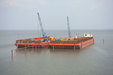
Construction pit

Pontoons were placed on either side of the construction pits located at each work section. The pontoons were used in the construction of the pits themselves and in the subsequent drilling operation and in the welding work to join the pipeline runs. The rigs used in the horizontal drilling operations were mounted on bridges set up between the individual pontoons in such a way that they were positioned above the construction pit.
mpk_088.jpg

05/2005
RGB - JPG
18 x 14 cm
300 dpi
2.94 MB

Reprints permitted free of charge
specimen copy requested

Download
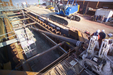
Drilling rig for Mittelplate

Manufacturing and fitting out of the new T-150 drilling rig for Mittelplate, which was installed on the drilling and production island in the second half of the year.
mpk_089.jpg

05/2005
RGB - JPG
18 x 13 cm
300 dpi
1.96 MB

Reprints permitted free of charge
specimen copy requested

Download

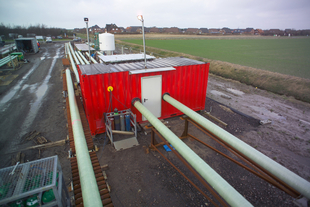
Dieksand Land Station

The crude produced from the onshore wells is processed at the Dieksand Land Station using separators and then piped to Brunsbüttel, from where it is transported to customers ready for refining. The onshore facilities are subject to the same stringent safety precautions and environmental protection measures as the offshore operations.

The processing of the additional crude produced offshore and transported through the pipeline linking the island to the Land Station requires the processing equipment to be modified and upgraded. The capacity of the treatment plant is upgraded from the current 1.2 million mt to 2.5 million mt of crude. By the end of 2005, additional process fields, a machinery hall, a gas dehydration plant, a flat-bottom tank, a range of processing vessels and separators are built on the 55,000 m² site, and operations buildings are expanded and upgraded.
mpk_090.jpg

07/2005
RGB - JPG
18 x 13 cm
300 dpi
3.58 MB

Reprints permitted free of charge
specimen copy requested

Download
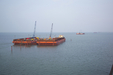
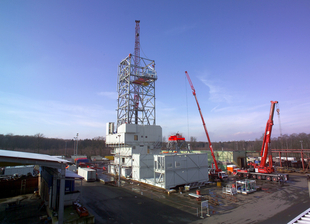
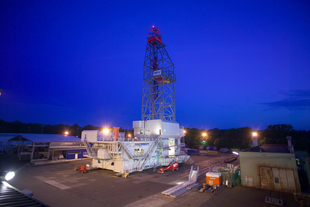
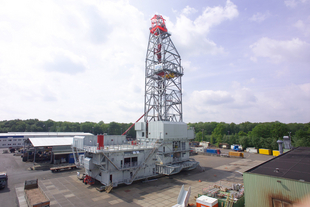
Drilling rig T-150 (Trial assembly on Bentec’s premises)

The drilling rig consists of a drilling tower of modular construction. Automated systems for drill pipe handling are installed in the tower, which is designed for a hook load capacity of 500 tons. Additional equipment, such as the tank facility and the mud pumps, are located on the so-called 'catchment dam' on Mittelplate Island. Some 2,200 tons of steel construction and equipment with a total height of 70 meters rest on an area of approx. 900 m². The rig is equipped with a 2,500-horsepower lifting facility. The mud water system has three 2,200-horsepower mud pumps generating a flushing pressure in excess of 500 bar.

The drilling rig, built by Bentec Drilling & Oilfield Systems, in Bad Bentheim, is specially designed for operating in the ecologically sensitive Wattenmeer tidelands.
mpk_091.jpg

08/2005
RGB - JPG
18 x 12 cm
300 dpi
2.12 MB

Reprints permitted free of charge
specimen copy requested

Download
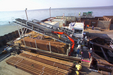
Land-based pipelaying operation

The land-based, open-trench pipelaying operation using pre-assembled piping runs is carried out in three sections. All the work, including the de-installation of the pre-assembly site, is completed by the end of August 2005.
mpk_092.jpg

08/2005
RGB - JPG
18 x 12 cm
300 dpi
2.2 MB

Reprints permitted free of charge
specimen copy requested

Download
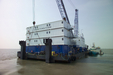
Welding operation

Pipelaying in the offshore component of the pipeline is carried out in six sections. Where the sections join, the piping runs made of high-grade stainless steel were welded together in six-meter deep construction pits.
mpk_093.jpg

08/2005
RGB - JPG
18 x 12 cm
300 dpi
1.3 MB

Reprints permitted free of charge
specimen copy requested

Download
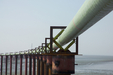
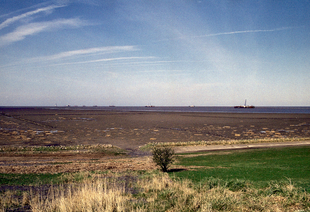
Offshore component of pipeline construction completed

The offshore pipelaying stage was concluded by the end of June 2005 without incident. The operation proceeded in such a way that impact on the natural landscape was only temporary. Viewed from the dike at Friedrichskoog, Mittelplate Island once again looks like a ship lying at anchor.
mpk_094.jpg

08/2005
RGB - JPG
18 x 13.5 cm
300 dpi
2 MB

Reprints permitted free of charge
specimen copy requested

Download
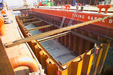
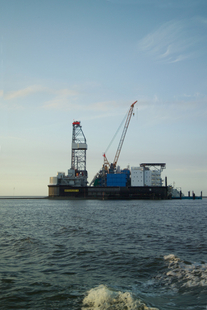
Conversion and upgrade of Mittelplate Island

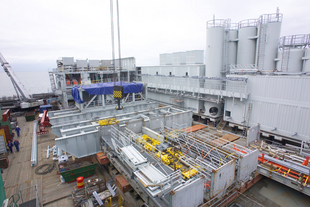
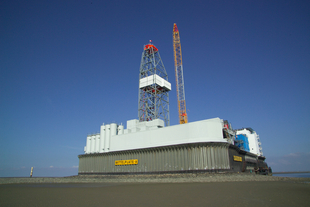
Work on upgrading and expanding the facilities on Mittelplate Island to prepare for the further optimization of exploration and production of the crude from the deposit is in full swing. The long-range view shows the compact design of the new plant and equipment. Assembly of the new high-performance drilling rig is under way.
mpk_095.jpg

08/2005
RGB - JPG
18 x 12 cm
300 dpi
1.51 MB

Reprints permitted free of charge
specimen copy requested

Download
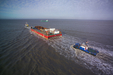
Transport of drilling rig

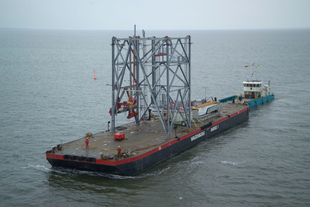
The prefabricated components of the new drilling rig weighing many tons are transported to the island on pontoons for final installation.
mpk_096.jpg

09/2005
RGB - JPG
18 x 12 cm
300 dpi
1.91 MB

Reprints permitted free of charge
specimen copy requested

Download
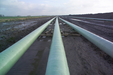
Portal crane in action

The prefabricated components of the new drilling rig weighing many tons are transported to the island on board pontoons for final installation, where they are unloaded and moved into position by the newly installed portal crane. The modular construction permits assembly on a minimal floor space.
mpk_097.jpg

08/2005
RGB - JPG
12 x 18 cm
300 dpi
1.63 MB

Reprints permitted free of charge
specimen copy requested

Download
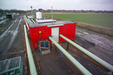
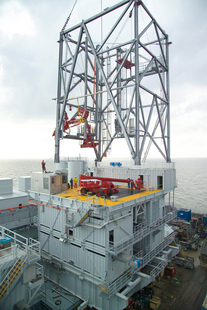
Installation of the drilling rig

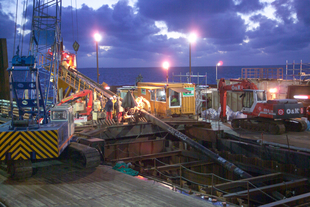
The installation of the new drilling rig on Mittelplate Island proceeds according to plan. In the first installation phase, the prefabricated components of the substructure weighing many tons were assembled. Installation of the tower’s 70-meter high superstructure is under way, including the installation of drill pipe handling and lifting equipment.
mpk_098.jpg

08/2005
RGB - JPG
18 x 12 cm
300 dpi
2.13 MB

Reprints permitted free of charge
specimen copy requested

Download
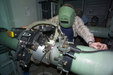
Drilling operation inside a construction pit

A horizontal drilling rig was installed at each of the construction pits to drill the boreholes. The horizontal directional drilling technology used in the offshore section allowed the impact on the tidal flats to be minimized. Cuttings and drilling mud were collected on the pontoons and duly disposed of. The drilling operations were carried out round the clock.
mpk_099.jpg

05/2005
RGB - JPG
18 x 12 cm
300 dpi
2.72 MB

Reprints permitted free of charge
specimen copy requested

Download
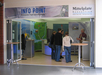
Drilling rig T-150 (Trial assembly on Bentec’s premises)

The drilling rig consists of a drilling tower of modular construction. Automated systems for drill pipe handling are installed in the tower, which is designed for a hook load capacity of 500 tons. Additional equipment, such as the tank facility and the mud pumps, are located on the so-called 'catchment dam' on Mittelplate Island. Some 2,200 tons of steel construction and equipment with a total height of 70 meters rest on an area of approx. 900 m². The rig is equipped with a 2,500-horsepower lifting facility. The mud water system has three 2,200-horsepower mud pumps generating a flushing pressure in excess of 500 bar.

The drilling rig, built by Bentec Drilling & Oilfield Systems, in Bad Bentheim, is specially designed for operating in the ecologically sensitive Wattenmeer tidelands.
mpk_100.jpg

08/2005
RGB - JPG
18 x 12 cm
300 dpi
1.65 MB

Reprints permitted free of charge
specimen copy requested

Download

Installation of the drilling rig

The heavy framework for the new T-150 drilling rig for Mittelplate was moved into position using the high-performance portal crane installed in May 2005.
mpk_101.jpg

08/2005
RGB - JPG
12 x 18 cm
300 dpi
2.02 MB

Reprints permitted free of charge
specimen copy requested

Download
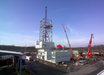
Optimized offshore production

In order to speed up production from the oil deposit, the Consortium implements important new projects by the end of 2005. A new high-performance drilling rig is installed on Mittelplate Island. A new portal crane was installed in May 2005.
mpk_102.jpg

09/2005
RGB - JPG
12 x 18 cm
300 dpi
1.51 MB

Reprints permitted free of charge
specimen copy requested

Download
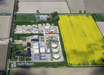
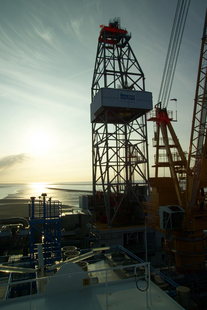
New drilling rig being installed

To keep developing the oil field as planned and meet the increasingly more demanding technical requirements, it became necessary to replace the island’s drilling rig. Following completion of the installation in December 2005, the high-tech rig is capable of driving the drill bit for distances of up to 10,000 meters to reach oil-bearing sandstone layers at a depth of 2,000 to 3,000 meters which had not been accessible previously. This is where Germany’s highest-yield oil reservoirs are located in the Mittelplate oilfield.
mpk_103.jpg

09/2005
RGB - JPG
12 x 18 cm
300 dpi
1.77 MB

Reprints permitted free of charge
specimen copy requested

Download
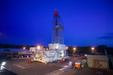
New drilling rig being installed

On Germany’s only offshore drilling and production island, the Mittelplate Consortium is installing a new drilling rig, with completion scheduled for the end of 2005. At a cost of around € 50 million, the T-150 rig is one of the biggest and most modern drilling rigs in Europe. It features special equipment to allow it to operate in the ecologically sensitive Wattenmeer tidelands without harming the environment.
mpk_104.jpg

09/2005
RGB - JPG
12 x 18 cm
300 dpi
2.2 MB

Reprints permitted free of charge
specimen copy requested

Download
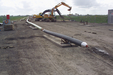
New plant and equipment for Mittelplate Island

Following the installation of the new living quarters, completed in 2003, numerous operational facilities on the drilling and production island are upgraded, optimized and replaced by the end of 2005. One of the key projects is the installation of a new drilling rig, at a cost of around 50 million euros. The new T-150 is one of the biggest and most modern drilling rigs in Europe.
mpk_105.jpg

09/2005
RGB - JPG
18 x 12 cm
300 dpi
1.57 MB

Reprints permitted free of charge
specimen copy requested

Download
Transport of drilling rig

The prefabricated structural components for the drilling tower of the new Mittelplate T-150 drilling rig were transported to the island on board pontoons.
mpk_106.jpg

09/2005
RGB - JPG
18 x 12 cm
300 dpi
1.77 MB

Reprints permitted free of charge
specimen copy requested

Download
Production trend

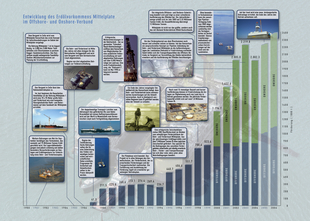
The consortium’s determination, back in the 1980s, to invest millions in the development of domestic oil reserves is paying off handsomely. The initial estimates for the Mittelplate reserve potential were repeatedly corrected upward over the course of the project. RWE Dea/Wintershall managed to increase annual rates of production continually with an optimization program for drilling, production and transportation concepts.

With the new pipeline link, the combined annual production volume of the offshore and onshore operations is around 2.5 million mt of crude.
mpk_107.jpg

10/2005
RGB - JPG
42.6 x 30.3 cm
300 dpi
11.24 MB

Reprints permitted free of charge
specimen copy requested

Download
The pipeline link

A milestone in the continued development of Germany’s biggest oil field was reached at the end of October 2005 with the commissioning of the pipeline linking Mittelplate Drilling and Production Island, located seven kilometers off the coast in the Wattenmeer tidelands, to the processing plant at the Dieksand Land Station in Friedrichskoog. Compared with the previous method of moving the crude off the island by barge, a method that was subject to tidal and meteorological restrictions, the increased transport capacity of the new pipeline link allows oil production on Mittelplate Island to be boosted from the current maximum of 900,000 mt up to 1.6 million mt of crude annually.
mpk_108.jpg

10/2005
RGB - JPG
8.3 x 15 cm
300 dpi
1.69 MB

Reprints permitted free of charge
specimen copy requested

Download
Oil production on Mittelplate

The Mittelplate Consortium – which consists of RWE Dea AG as operator and Wintershall AG, each with a 50% share – had produced more than 15 million mt of crude from Germany's biggest reservoir by the end of September 2005. Estimates of commercially recoverable reserves run at about 40 million mt of crude.

From the artificial Mittelplate Drilling and Production Island set up seven kilometers off Friedrichskoog in the Wattenmeer tidelands, 18 of a possible 44 wells have been completed and 9.5 million mt of crude oil produced to date.

The total volume produced using land-based extended-reach wells is more than 5.5 million mt.
mpk_109.jpg

10/2005
RGB - JPG
13 x 13 cm
300 dpi
2.54 MB

Reprints permitted free of charge
specimen copy requested

Download

Mittelplate Island (aerial photograph)

In the course of the pipeline construction project, the Mittelplate Consortium made a considerable capital investment in 2005 in refitting and upgrading the Drilling and Production Island. The new plant and equipment will secure the continued development of production from Germany's largest and most productive oil field.
mpk_110.jpg

10/2005
RGB - JPG
13 x 13 cm
300 dpi
2.9 MB

Reprints permitted free of charge
specimen copy requested

Download
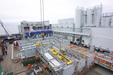
Island receives new drilling rig

Numerous operational facilities on Mittelplate Drilling and Production Island are upgraded, optimized and replaced by the end of 2005. One of the key upgrades is the installation of a new drilling rig (the T-150), at a cost of around 50 million euros. It is one of the biggest and most modern drilling rigs in Europe.
mpk_111.jpg

10/2005
RGB - JPG
20 x 13 cm
300 dpi
2.15 MB

Reprints permitted free of charge
specimen copy requested

Download
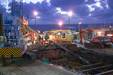
New drilling rig

A new drilling rig was installed on Mittelplate Drilling and Production Island in 2005. The new T-150 is one of the biggest and most modern drilling rigs in Europe. The rig features special equipment designed for environmentally compatible operation in the ecologically sensitive Wattenmeer tidelands. The T-150 is capable of drilling wells over distances of between 8,000 and 10,000 meters to reach oil-bearing sandstone layers at a depth of 2,000 to 3,000 meters which had previously not been accessible.
mpk_112.jpg

10/2005
RGB - JPG
13 x 18 cm
300 dpi
2.26 MB

Reprints permitted free of charge
specimen copy requested

Download
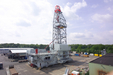
Optimized oil production

In order to exploit the Mittelplate oil field even more efficiently and within a shorter period of time, the Consortium implemented new and important projects by the end of 2005. These include the replacement and upgrade of equipment that will allow the development of the oil field to be optimized further, and a pipeline link from Mittelplate Island to the Dieksand Land Station, as well as the installation of a new drilling rig on the Drilling and Production Island.
mpk_114.jpg

10/2005
RGB - JPG
18 x 13 cm
300 dpi
2.13 MB

Reprints permitted free of charge
specimen copy requested

Download

Expansion of the Land Station

Processing of the additional crude produced offshore and transported through the pipeline linking the island to the land station requires significant modifications and upgrades to the land-based treatment plant. The throughput of the processing systems is boosted from 1.2 million to 2.5 million mt annually.
mpk_115.jpg

10/2005
RGB - JPG
18 x 13 cm
300 dpi
4.9 MB

Reprints permitted free of charge
specimen copy requested

Download

Ecologically sensitive production region

Operating in an ecologically sensitive production region called for the ongoing development of a consistent safety concept that is now considered exemplary throughout the world. To protect the sensitive ecosystem of the Wattenmeer tidal flats, the artificial Mittelplate island was constructed in the form of a compact, leak-proof concrete-and-steel basin that is designed to withstand extreme conditions and features a comprehensive closed waste and residue disposal system.
mpk_119.jpg

02/2006
RGB - JPG
25 x 16.7 cm
150 dpi
0.88 MB

Reprints permitted free of charge
specimen copy requested

Download

Mittelplate offshore

In the years since production in Germany’s largest oil field at Mittelplate began in 1987, RWE Dea as the operator has achieved consistent and reliable protection of the sensitive Wattenmeer ecosystem thanks to sophisticated, state-of-the-art technology, multiple redundancies in all work procedures and the use of experienced and responsible skilled staff. This represents proof that oil can indeed be produced even in ecologically sensitive regions without leaving a lasting impact on the environment.
mpk_120.jpg

02/2006
RGB - JPG
25 x 16.7 cm
150 dpi
1.02 MB

Reprints permitted free of charge
specimen copy requested

Download

Processing in Friedrichskoog

The crude produced on Mittelplate is processed at the Dieksand Land Station before being pumped to refineries. Processing of the crude produced on the island and now transported through the pipeline linking the island to the Land Station required significant modifications and upgrades to the land-based treatment plant. The throughput of the processing systems is boosted from 1.2 million to 2.5 million mt annually.
mpk_121.jpg

02/2006
RGB - JPG
16.8 x 11.2 cm
150 dpi
0.6 MB

Reprints permitted free of charge
specimen copy requested

Download
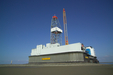
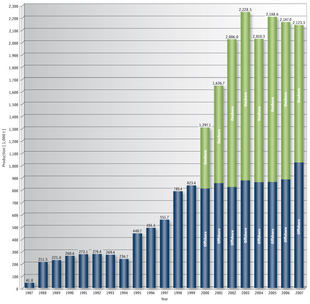
Production trend at Mittelplate oil field

The Mittelplate Consortium managed to increase annual rates of production continually with an ongoing optimization program for the drilling, production and transportation concept. As a result of the supplementary onshore development in operation since mid-2000, production volumes have gone up considerably.

By June 2005, the Consortium had produced approx. 9.5 million mt of crude from Mittelplate Drilling and Production Island, using 18 of a possible 44 wells. The volume produced from the onshore operation is 5.5 million mt. By the end of the year 2005, the total volume produced from the oil field was 16 million mt of crude.
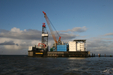
The reduction in the onshore production volume in 2004 shown in the graph was due to technical reasons. Maintenance operations and upgrades on the producing wells have resulted in a renewed increase in production volumes since May 2005. The completion of the pipeline link has created the prerequisites for a boost in offshore production to an annual volume of up to 1.6 million mt of crude. This will result in total annual production volumes of around 2.5 million mt.
Foerderentwicklung_02-08_GB.jpg

03/2008
RGB - JPG
20 x 19.6 cm
144 dpi
0.48 MB

Reprints permitted free of charge
specimen copy requested

Download